




UL certification is a true mark of quality for machinery and equipment shipped to North America. In order for components, parts, products, and complete control cabinets to receive UL certification, they must demonstrably meet the safety requirements of the relevant UL standards. Underwriters Laboratories Inc., known as UL for short, which issues the UL label, is one of the world’s leading organizations for the testing and certification of materials, components, and end products in the field of product safety.
Relation to UL
UL certification is the official confirmation that a product complies with the relevant UL standards. It generally makes the approval process for a control cabinet by regulatory officials in the United States considerably easier.
What is UL certification?
UL certification attests that a product has been manufactured and tested in accordance with applicable standards. No other certification mark carries comparable weight in the United States; therefore, UL certification is regarded as a true mark of quality for machinery and equipment shipped to North America.
Why is UL certification important?
In order for components, parts, products, and complete control cabinets to receive UL certification, they must demonstrably meet the safety requirements of the applicable UL standards. Underwriters Laboratories Inc., known as UL for short, which issues the UL label, is one of the world’s leading organizations for the testing and certification of materials, components, and end products in the field of product safety.
How much does UL certification cost?
Unfortunately, there is no one-size-fits-all answer to the question of the cost of UL certification. The price depends heavily on exactly what is to be certified: a material such as plastic, a component such as a fuse, or an entire system. Each product requires a specific evaluation, which varies in terms of effort and cost. The assignment of different UL markings is based on the requirements of the respective UL standards.
What factors influence the cost of UL certification?
The cost of UL certification is influenced by a variety of factors that vary depending on the product and requirements. A key factor is the type of product: While simple components such as fuses require less extensive testing, the costs increase significantly for complex systems or control panels.
Product Type and Complexity
The type of product is a key factor. Individual materials or components are generally easier and less expensive to certify than complex systems such as control cabinets. Larger or more technically sophisticated products require more extensive testing, which increases costs.
Potential Risk
Products that pose a higher risk, such as high-voltage electrical systems, require more extensive testing. These additional tests are necessary to minimize safety risks such as fire hazards or electric shock.
Quality of Documentation
Complete and accurate documentation plays a crucial role. Incomplete documentation can significantly slow down the certification process and result in additional costs, as it necessitates rework and additional inspections.
Cost of a UL-certified control cabinet
In addition to certification costs, the construction of a UL-compliant control cabinet also involves higher expenses. For one thing, UL-compliant components are often significantly more expensive than IEC components. For another, designing and documenting the system in accordance with standards requires considerably more time and resources.
Experience shows that, depending on the complexity, the total cost of a UL-certified control cabinet can be up to three times higher than that of a comparable IEC control cabinet. Particularly in the case of complex systems, the increased requirements for safety, material selection, and installation must be taken into account.
Cost-Cutting Measures for UL Certification
There are various approaches to minimizing the costs of UL certification. One of the most effective measures is to use UL-listed components, as these have already been tested and certified. This significantly reduces the testing effort. Equally important is complete and accurate documentation, as corrections and additional testing can result in high costs.
How can costs be reduced?
Working with experienced service providers who specialize in UL certifications can make the entire process more efficient. These experts have the necessary expertise to help avoid mistakes as early as the planning phase. Investing in training on UL standards such as UL 508A also pays off in the long run, as it helps ensure a better understanding of the requirements and their proper implementation.
What happens with regard to corrective work and the associated costs?
If a product fails UL testing, significant additional costs may result. Typical causes include defective components, inadequate documentation, or failure to meet safety standards.
Risks and Additional Costs
Rework often requires replacing components or making additional adjustments, which can be costly and time-consuming. On-site work in the U.S. or Canada incurs additional travel expenses and presents logistical challenges. Retesting also significantly increases the overall effort.
Prevention Through Planning
Thorough planning is crucial to minimizing these risks. All requirements should be carefully reviewed as early as the development phase. Using certified components and enlisting the support of experienced service providers can also help prevent the need for corrective actions.

Underwriters Laboratories: The UL Mark
In the U.S., too, issues such as workplace safety and occupational health are playing an increasingly important role. While the U.S. has a federal agency—the Occupational Safety and Health Administration (OSHA)—that was established specifically to enforce occupational safety and health laws, However, the final decision on whether a control cabinet or a machine may be put into operation rests with representatives of the local authorities (Authority Having Jurisdiction (AHJ)). To make it easier for them to grant approval, Underwriters Laboratories (UL) tests control cabinets and other components.
For which markets is UL certification particularly relevant?
As an OSHA-accredited testing laboratory , Underwriters Laboratories meets all requirements for testing and certification and is also recognized as an NRTL in all U.S. states . As a recognized and established symbol of safety and quality, the UL mark simplifies As a rule, approval must be obtained from the relevant Authority Having Jurisdiction (AHJ)—and in two separate instances.
Benefits of UL Certification: Faster, simpler, safer
First, a product that has already been certified complies with the applicable norms and standards. This eliminates problems arising from insufficient compliance with a standard, as well as the need for time-consuming corrective work. On the other hand, the acceptance process is often faster because the AHJ inspector can assume that a product certified in accordance with UL standards has been manufactured in compliance with those standards.

The Most Important Questions About UL Certification
What does UL stand for?
UL is an independent organization headquartered in Northbrook that tests products and components to ensure they meet specific safety requirements. To do this, the company uses its own standards, which are based on relevant U.S. laws, to assess products, materials, components, or parts for potential risks of fire, electric shock, or mechanical hazards. UL Certification—that is , the UL mark—demonstrates compliance with the safety norms and standards in effect in the United States.
What are the differences between UL and other certifications?
The differences between the UL mark and the CE mark reflect the different target markets and regulatory frameworks under which they apply. The UL mark is specifically designed for the North American market, where it certifies compliance with specific safety requirements, primarily related to fire safety and electrical safety. In contrast, the CE marking serves as proof that a product complies with EU regulations, which cover a broad range of requirements, including safety, health, environmental protection, and consumer protection.
What are UL’s areas of certification?
Over time, UL has significantly expanded its certification scope and now covers a wide range of products. These include industrial equipment such as control cabinets and machinery, household and office appliances such as washing machines and lighting, safety equipment such as fire extinguishers, as well as more specialized areas such as food safety and aviation safety, including drones. UL also tests products that use hazardous substances to ensure their safe handling.
What UL equipment classifications are there?
There are specific equipment classifications for UL-compliant control cabinet construction, which are defined in the relevant UL standards. These are based on various safety and performance standards that apply depending on the control cabinet’s area of application and environmental conditions. If a component has neither UL Listed nor UL Recognized certification , it can generally be concluded that this component must not be used in a UL-compliant control cabinet .

For UL Listing, representative samples of a product are tested. If these samples meet UL’s applicable safety requirements during testing, they are awarded the “UL Listed” mark. This certification is commonly referred to as “UL approval.”

The UL Recognized certification applies exclusively to components, not to complete products. If components or materials receive the UL Recognized Component mark , they may be used in a product or system that already bears the UL Listed label. In that case, the entire product does not need to be tested again.

The UL Classified designation is used to confirm compliance with certain U.S. standards or performance under specific conditions, but not necessarily for general safety. This designation is often found on construction products that must meet fire safety requirements.
How do you obtain UL certification?
In principle, any manufacturer can have its products certified by UL. However, particularly in the machinery and plant engineering sectors, it is common practice to use a certified manufacturer for the design of the control cabinet, as this allows a custom control cabinet to be manufactured according to the customer’s specifications without requiring an expensive UL certification process for each individual unit.
In order for an electronic product to be certified with a UL mark, it must first be tested by an NRTL in accordance with the requirements of the applicable standards. This inspection is very comprehensive and covers fire and electric shock hazards, as well as the risk of explosion in hazardous locations. Since UL is recognized throughout the United States as a qualified testing laboratory, a UL mark provides particular assurance of approval by the relevant regulatory authority.
Can a Declaration of Conformity replace UL certification?
No. Unlike the Declaration of Conformity commonly used in Europe, the United States does not require such a document from the manufacturer. The fact that a control cabinet meets the applicable safety requirements and possesses certain characteristics can only be confirmed by a label from a recognized testing laboratory.
Everything You Need to Know About UL Certification for Control Cabinets at a Glance – Our White Paper
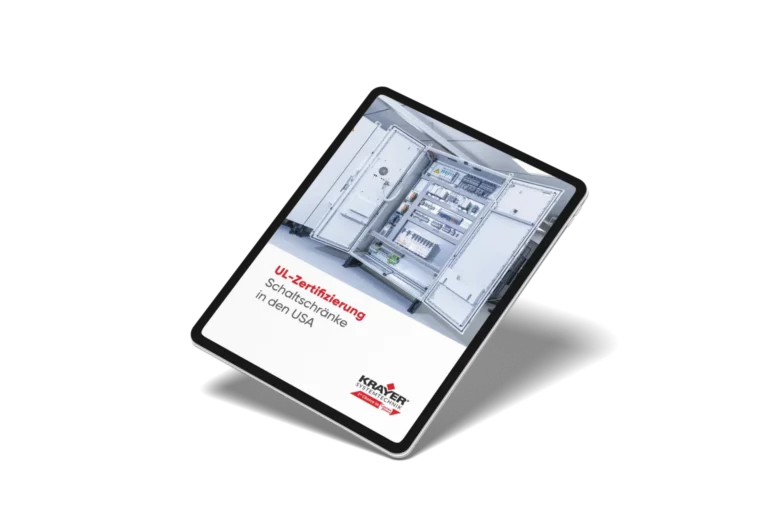
For anyone interested in learning more about UL certification, we recommend our detailed white paper. Here you’ll find everything you need to know about key standards such as UL 508A and UL 1203, as well as the certification process. The white paper is a practical guide to entering the U.S. market and explains how you can successfully meet the legal and safety requirements in the United States.
When do I need UL certification for control cabinets?
In order to put control cabinets into service, they must be certified or undergo a comprehensive evaluation before use. However, this can quickly lead to problems, as CE certification is not recognized in the United States. Instead, U.S. authorities rely on UL certification. Certification by the independent organization Underwriters Laboratories—known as UL certification—is held in particularly high regard in all U.S. states.
Is UL certification required by law?
This might lead one to assume that UL certification is required by law, but that is not the case. Unlike the CE marking, which is legally required in the European Union for all products sold there, UL certification is not mandated by law and is therefore not strictly necessary. However, UL certification is held in such high regard and is recognized as a mark of product safety even beyond the United States.

Do all components have to be UL-certified?
Many components have been tried and tested over the years and are already providing valuable service, for example, in EU control cabinets. It therefore seems reasonable to consider using them in UL control cabinets as well. However, this can quickly lead to problems, because components for the North American market require special UL certification, which is granted by UL (Underwriters Laboratories Inc.).
What must be UL-certified?
OSHA requires that all electrical equipment used in the workplace be certified or undergo a thorough evaluation prior to use. As part of this requirement, OSHA only accepts components or finished products that have been tested by a testing laboratory it recognizes (Nationally Recognized Testing Laboratory ( NRTL)). In the federalist system of North America, many states, counties, or cities have similar or additional requirements for electrically controlled devices or systems.
UL Standard: Components Must Also Be UL-Certified
Even though there is no law that mandates UL certification, in practice it is nearly impossible to put control cabinets containing components without UL approval into service. There is a strong correlation between UL’s standards and testing procedures and the regulations of other U.S. institutions. For example, the National Electrical Code (NEC)—the safety standard for electrical installations in the U.S.—refers to UL standards and takes them into account in its ongoing development. If a component is a custom-made, specialized, or prototype product, a Limited Production Certification is recommended.
Exceptions to the Rule
However, the strict UL standard allows for exceptions under certain conditions. The competent regulatory authority in the U.S., the AHJ, plays a decisive role in this process. The AHJ inspector decides whether a system can be put into operation. If the inspector accepts components that do not have UL certification, the system is connected to the grid. If the inspector vetoes them, the system remains shut down. And this is precisely where the major risk lies for businesses that use UL components without certification . They can never be certain how the AHJ inspector will rule.
However, it is possible to clarify in advance whether the AHJ will accept the components without UL certification. This clarification must be made in writing. Only with written approval can the control panel’s compliance with the UL Listed markin accordance with UL 508A, UL 698A, or UL 1203 be confirmed.
2024 Update: UL News on UL 508A
First things first: Which control cabinets are actually affected by this change? Basically, all control cabinets that fall under UL 508A are affected—that is, control cabinets for industrial systems in “ordinary locations” (Ordinary Location, OrdLoc). This means that neither the control cabinet nor the system is UL-certified for a hazardous location.
Note: The following summary provides only a brief overview of the most important amendments to UL 508A. For a comprehensive overview of all changes, it is advisable to consult the original standard.
New Standard Ambient Temperature for Control Cabinets with UL Certification
According to the revised standard, the standard ambient temperature for UL-certified control cabinets is now between 5 °C and 41 °C (41 °F – 104 °F). If a control cabinet has been designed in accordance with UL 508A for a different temperature range, this must be specifically indicated.
Control cabinets for elevator systems are excluded from UL 508A
Another new development is that control cabinets intended for elevator systems have been removed from UL 508A. Which UL standard do they now fall under? Currently, there is no standard for the certification of such control cabinets. The only option is to wait for a future decision from UL.
New: Detailed Regulations on NEMA Ratings
The requirements for the NEMA rating (or Standard 250 of the National Electrical Manufacturers Association) are now regulated in greater detail. However, even after the amendment, the NEMA rating cannot replace UL certification of the control cabinet enclosure in accordance with UL 50.
Where does the UL certification of the control cabinet take place?
There are essentially three different ways to obtain UL certification for a control cabinet. First, a control cabinet manufacturer can have its products inspected by UL International in its home country after manufacturing, or it can manufacture only a specific, certified control cabinet model.
Alternatively, the control cabinet can also be accepted at the site of use in the U.S. However, all of these methods have disadvantages compared to ordering a custom control cabinet from a UL-certified control cabinet manufacturer.
In-house UL certification of the control cabinet
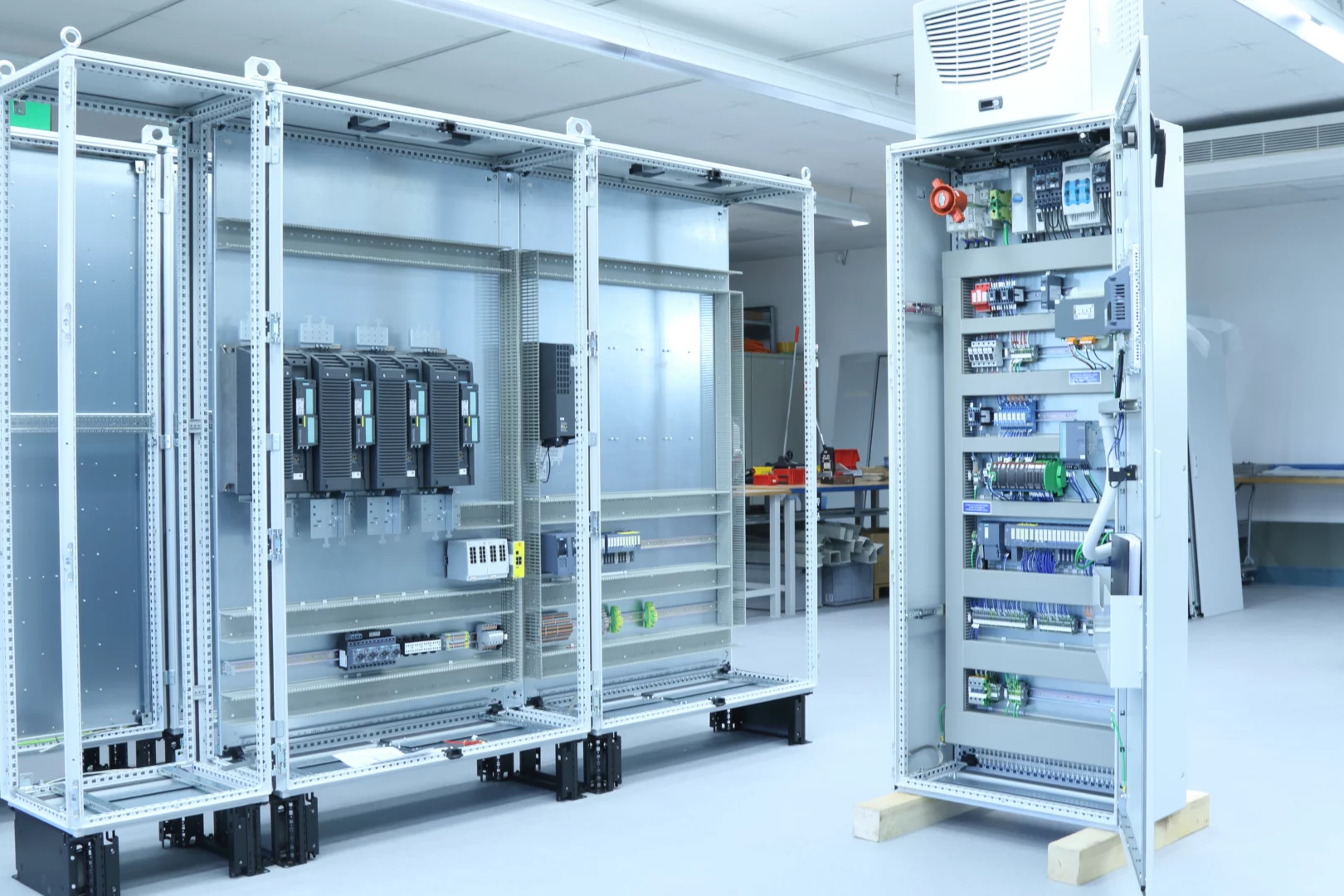
In this context, UL certification is always carried out by inspectors from an NRTL (Nationally Recognized Testing Laboratory)—that is, a testing laboratory recognized by the U.S. government, such as UL, Intertek, or TÜV Süd—and there are two possible approaches: individual approval and type certification.

Individual Acceptance
Limited Production Certification (LPC) is available for the custom manufacturing of control cabinets and, under certain conditions, also for small-batch production. NRTL inspectors conduct rigorous product inspections at the manufacturing site, during which the manufacturer must demonstrate compliance. Upon completion, the inspectors affix the UL label.
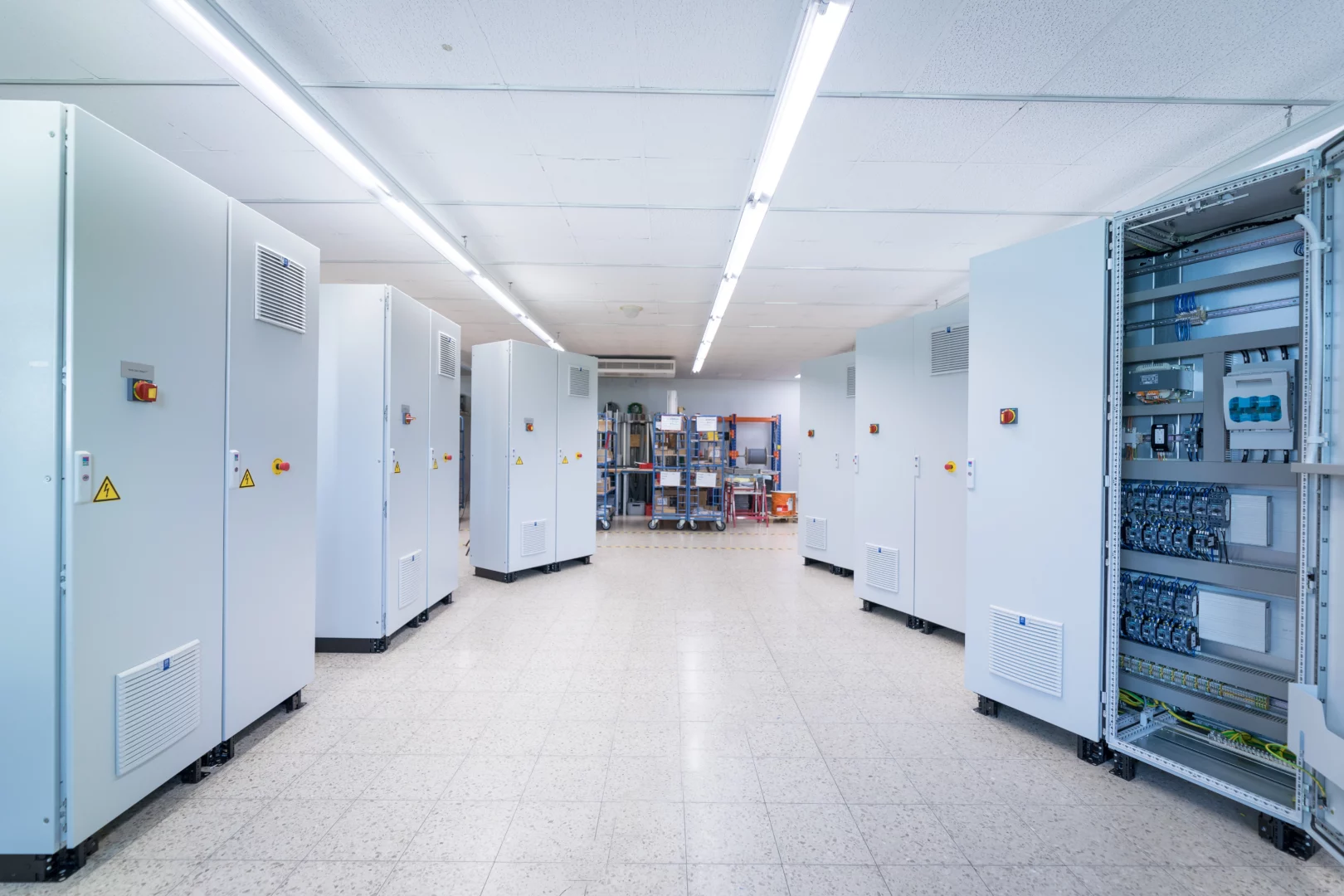
UL Type Certification, including production monitoring
For control cabinet series with an identical design, NRTL inspectors visit the facility at regular intervals to conduct a detailed inspection of the product and the quality of the manufactured components. They also review the entire production process. Everything must comply with the strict guidelines of the U.S. market. Any change to components or the manufacturing process triggers a new certification process. This applies even if it is merely a design change to a control cabinet that is already UL-certified (known as “follow-up service”).
Risky: UL Certification After Installation in the U.S. or Canada
Another option is to manufacture the control cabinets in Germany in accordance with UL standards, but without a UL label. Once the entire machine or system has been installed in North America or Canada , they are then certified by the local certification body. The problem: If issues do arise during acceptance testing, the system must either be sent back to Europe for repairs, or the manufacturer must send personnel to the U.S.

Simple: The UL Mark Directly from the Control Cabinet Manufacturer
To simplify the complex certification process , it makes sense to build a system’s control cabinet in accordance with the local standards and regulations in the U.S. and have it certified with an appropriate label.
With UL certification, Krayer can offer you exactly that. The certifications we have earned confirm that we possess the necessary qualifications to manufacture, test, and certify control cabinets in accordance with UL standards. Thisincludes extensive knowledge of the use of approved materials, components, and parts. As a result, all components intended for use in a control cabinet bearing the UL mark generally require UL certification as well .
For more than 30 years, we have been continuously expanding our expertise in control panel manufacturing in accordance with UL standards, making it easy for you to export your equipment to the United States. How does it work? We’ll show you what UL-compliant control panel manufacturing looks like in practice at our facility.
The UL Certification Process: The UL Control Cabinet as an Example
In most cases, the customer already provides us with a wiring diagram of the control cabinet or the entire system in accordance with IEC standards. Using this IEC wiring diagram , the design process can proceed quickly, since the functionality is already clearly documented. We review the diagram, make adjustments where necessary to ensure UL compliance, and prepare the documentation required by UL as well as the corresponding calculations.
Testing of Components for UL Compliance
Does your control cabinet not yet have an IEC control diagram? In that case, the design is based on the system concept or a list of sensors and actuators. All components are checked for UL compliance, as well as for proper installation, use, and wiring in accordance with UL specifications, and adjusted as necessary. The documentation—including the necessary analyses and calculations required for UL-certified control cabinets—is also prepared here.

Digital Twin as a Virtual Replica
As the UL-compliant schematic is being created, the digital twin of the UL control cabinet takes shape piece by piece in the CAD design process. Using EPLAN Pro Panel creates a virtual 3D model of the UL control cabinet that precisely shows how the cabinet is constructed and where all components are located. This gives the customer a complete digital view of the control cabinet even at this early stage. The customer can now verify whether all components are in their optimal positions and, if necessary, make changes to the details before production begins.

UL Switchgear – From Approval to Wiring
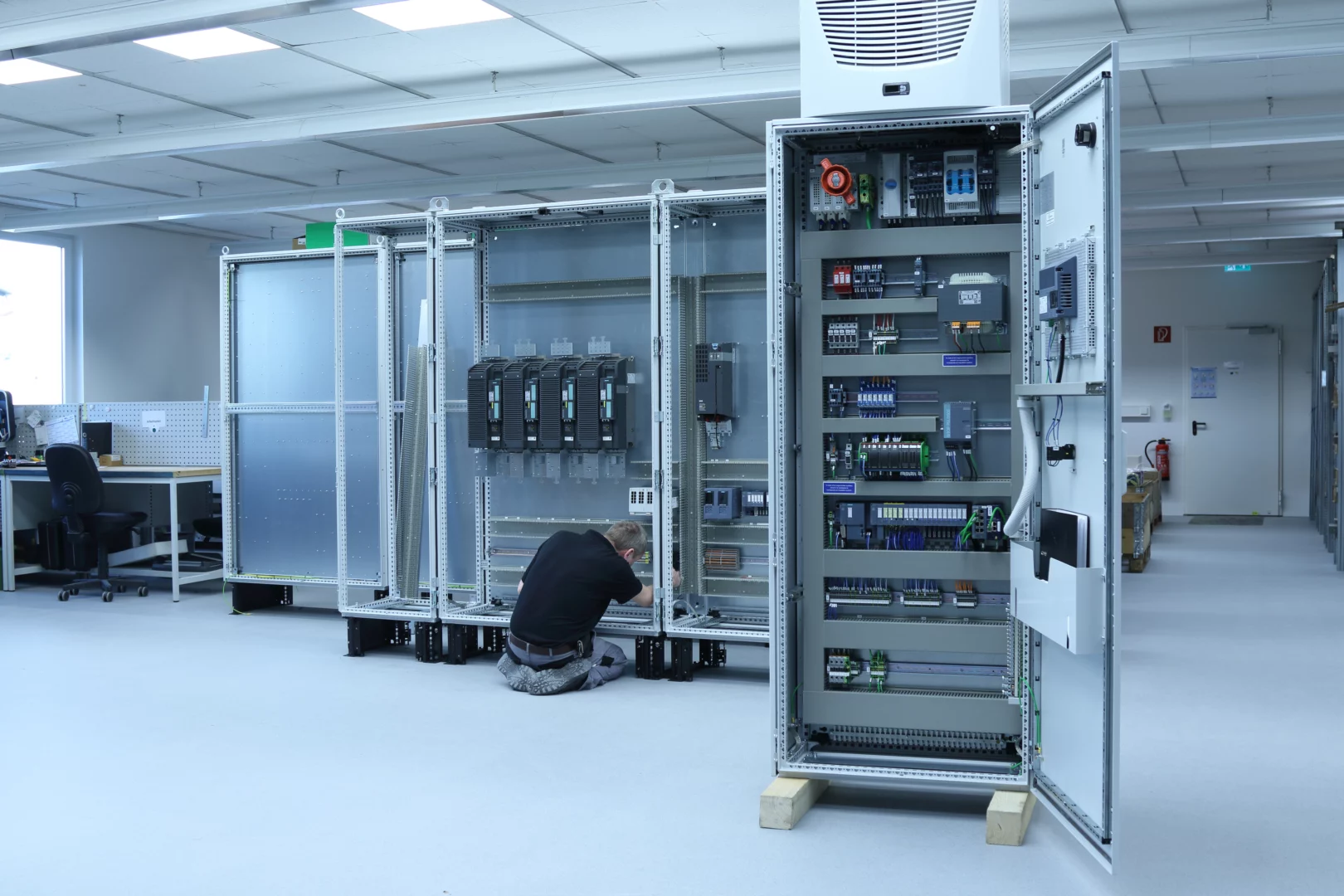
Once the control panel documentation and layout have been approved based on the digital UL control panel twin, it is the job of our electrical technicians and their assistants to turn the planned control panel into a real product that will reliably serve its purpose for many years. First, we begin by procuring the materials; then the order moves on to production.
Here, too, the digital twin supports control cabinet construction in all areas: Our automated milling center manufactures a physical enclosure for the UL control cabinet according to the specifications of the digital twin. The enclosure is then sent to the mechanical assembly area, where the mounting plates are fitted. Once all components have been integrated into the control cabinet, they are carefully labeled. Then the wiring of the switchgear begins.

UL Certification and Beyond
Once the control cabinet has passed the test, it receives the “seal of approval” in the form of the coveted UL mark, which serves as proof of certification. Now, every inspector can be confident that this control cabinet meets the strict requirements of the relevant UL standards.
UL Services: Beyond Certification
At Krayer, however, the process doesn’t end with UL certification —we offer our customers comprehensive UL services: Krayer prepares the UL-certified control cabinet for shipment, not only for delivery within Germany but also for direct transport to the U.S. or Canada. Upon request, Krayer and its partners handle the entire export process—from seaworthy packaging to transport and customs clearance, all the way through to reassembly and commissioning in the U.S.
Zusammenfassung
Ohne UL-Zertifizierung ist die Inbetriebnahme eines Schaltschranks in den USA oder Kanada meist mit einem deutlich höheren Aufwand verbunden. Der einfachste Weg zum UL-zertifizierten Steuerschrank führt über einen spezialisierten Schaltschrankbauer, der das Produkt individuell nach Kundenwunsch planen und herstellen kann.


