



There is no one-size-fits-all answer to the question of who the Authority Having Jurisdiction (AHJ) is. Generally speaking, the AHJ is a public official who is responsible for monitoring and enforcing the relevant regulations within a specific area of jurisdiction.
Relation to UL
An authorized inspection authority (AHJ) inspects the machine, including the control cabinet, before it is connected to the power grid. The AHJ is therefore the final authority and is responsible for approving the system. If the machine and/or the control cabinet do not comply with standards, the AHJ is authorized to shut them down. In this case, it is referred to as a “red tag.”
Who is the Authority Having Jurisdiction?
The fact that an Authority Having Jurisdiction is limited to specific areas of law means that there is not a single AHJ in every administrative unit that holds all authority. Authorities responsible for occupational safety and health, fire prevention, or the enforcement of building codes can serve as AHJs within their respective areas, just as a property owner can within their own property. A very well-known AHJ is the fire marshal, who also serves as a good example of the local variations among AHJs.
The U.S. Federal System and the AHJs
The federal system of the United States means that the responsibilities and authorities of the individual Authorities Having Jurisdiction can sometimes vary significantly, even within the same subject area. For example, the Fire Marshal in Virginia is primarily responsible for enforcing building fire safety codes, while his counterparts in New York also investigate arson cases and, for that purpose, have all the powers of police officers.
Not all Authorities Having Jurisdiction have titles as impressive as “Fire Marshal”; many are colloquially referred to simply as AHJ inspectors. Their responsibility is significant, because once a building or facility has been approved by the AHJ, the AHJ is liable for any damages that result from a failure to properly monitor compliance with applicable regulations. For this reason, AHJs have far-reaching authority and can require virtually any modification they deem appropriate. But what does this mean for the approval of industrial facilities?
Industrial facilities and the competent building authority
When approving industrial facilities, numerous aspects of occupational safety—such as electrical safety, fire safety, and noise control—play a role. The national authority responsible for occupational safety in the United States is the Occupational Safety and Health Administration (OSHA). The National Fire Protection Association (NFPA), on the other hand, is responsible for fire safety; through the National Electrical Code (NEC), it can claim authorship of the most important American fire safety law.
However, both agencies are primarily responsible for establishing legal standards. Monitoring compliance with these standards falls to agencies or officials, who are generally located at the county level (roughly equivalent to our districts) or at the city and municipal levels. As mentioned, the responsible authorities vary from state to state. In many states, the fire marshals mentioned above are responsible for enforcing the National Electrical Code; if that is not the case, the AHJ inspector responsible for enforcing the NEC is often referred to as electrical inspector .
Important to know: Local lawmakers in the U.S. have the authority to enact regulations that not only expand and tighten the requirements of the National Electrical Code, but also modify them or even contradict them to a certain extent. Local law therefore takes precedence over national law in this context. However, in recent years there has been a strong trend toward national standardization of legislation. The National Electrical Code and the UL standards incorporated into it are leading the way in this process.
UL and the Authority Having Jurisdiction
So what does UL have to do with the Authority Having Jurisdiction? From a purely legal standpoint, the answer is clear: nothing at all. UL is a private-sector company that tests equipment, devices, and components against its internal UL standards for a fee and, if they pass, affixes a certification mark. However, UL certification is held in such high regard in the United States that it carries enormous practical significance.
Experience has shown that many AHJ inspectors rely on UL labels when inspecting a machine or system and grant operating approval if a label is present. However, it must be clearly emphasized once again at this point: A UL label is no guarantee of an operating permit. The competent AHJ has every right to demand modifications in accordance with its individual requirements and expectations.
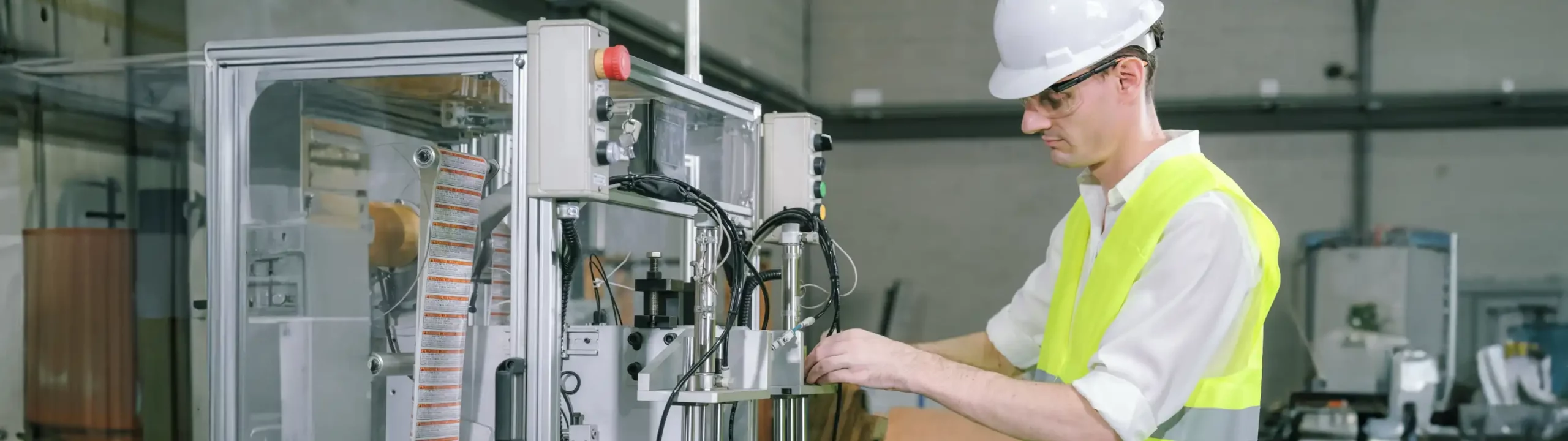
Inspection by an AHJ inspector: Is a UL label recommended for the entire system?
While a UL Field Inspection Label can significantly facilitate approval by the Authority Having Jurisdiction, it is also very costly. Experience has shown that in the vast majority of cases where AHJs have refused to approve the commissioning of a system, the objections have concerned the system’s control cabinet.
For this reason, from an economic standpoint, it usually makes more sense to use a UL-certified control cabinet and have the rest of the system approved by the relevant authority without a UL label. In practice, therefore, there is a close connection between UL certification and the approval of a system by the local Authority Having Jurisdiction.
Zusammenfassung
The so-called Authority Having Jurisdiction (AHJ) is responsible for inspecting electrical panels before they are connected to the power grid. There is not just one AHJ in every administrative unit for specific areas of law. Rather, various agencies—such as those responsible for health, safety, or fire protection—can serve as AHJs within their respective areas; a well-known example of an AHJ is the fire marshal.

