




Anyone seeking to have a control panel for a machine or system approved by U.S. authorities for the first time will find that the procedure differs significantly from the one typically followed in Europe. In our blog post, we explain why this is the case and whether obtaining UL certification can simplify the approval process.
Relation to UL
A control cabinet that already bears the UL label allows the competent authority to immediately see that it was built by an expert. This means the competent authority can even forego inspecting the control cabinet altogether, since compliance is already demonstrated by the UL label.
Fire safety is more important for switchgear in the U.S.
When the first electrical safety regulations were enacted in the United States, they were aimed not only at preventing accidents but, in particular, at eliminating the hazards associated with electricity as a source of fire. These historical roots are still evident in the relevant laws today. Anyone who has previously dealt only with switchgear for the European market will notice that fire protection still plays a significantly greater role in U.S. regulations today. This is also reflected in the requirements that are verified during the system’s acceptance testing.

Who inspects and accepts switchgear in the U.S.?
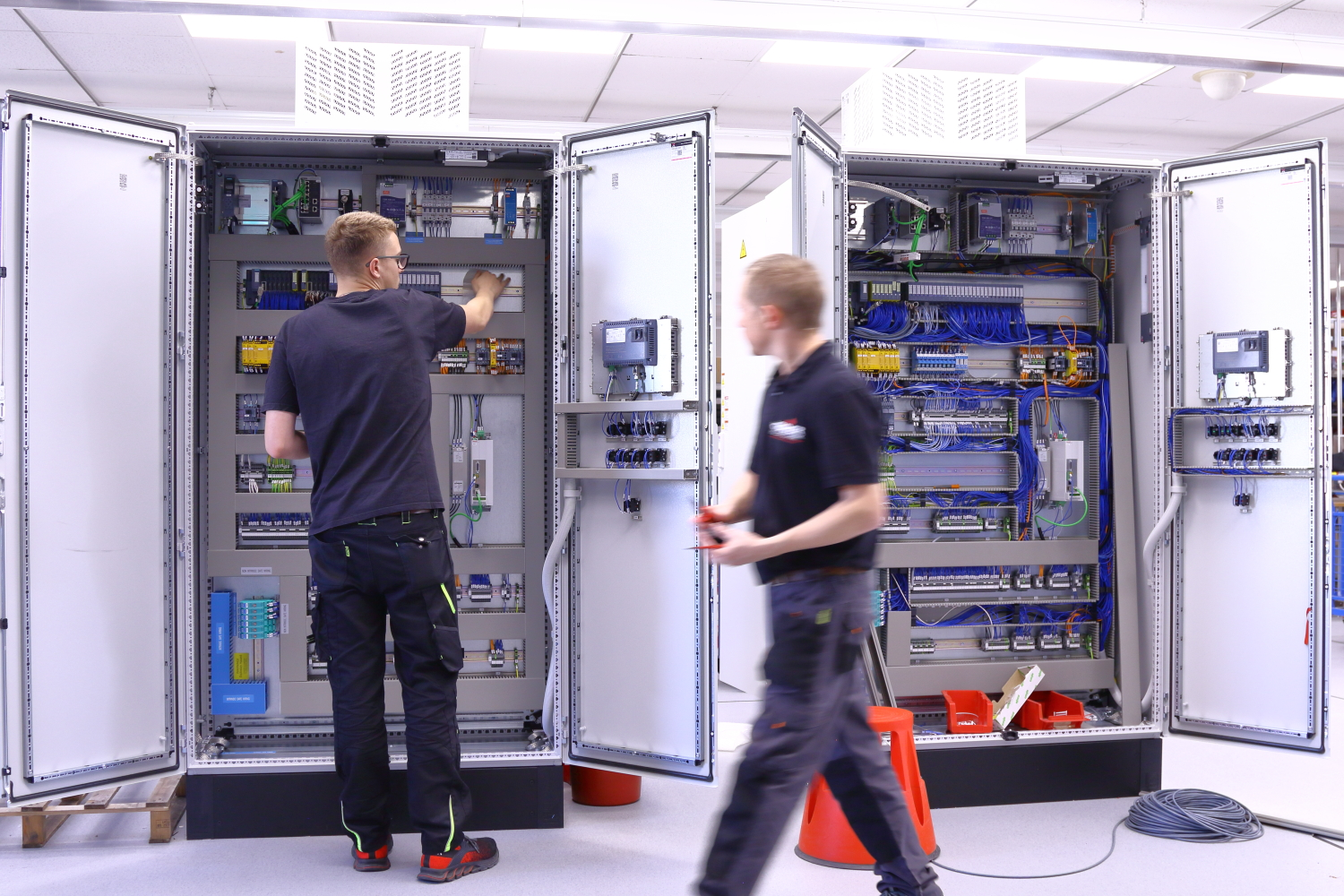
The acceptance inspection of the switchgear is conducted as part of the acceptance inspection of the entire machine or system at the site of installation in the United States. An inspector from the locally responsible authority (Authority Having Jurisdiction, AHJ) is responsible for this process. Exactly which authority this is and who serves as the inspector on its behalf varies from state to state. In some cases, the inspectors are qualified professionals, such as electrical engineers; however, particularly in rural areas, the acceptance inspection in some states is also conducted by members of the fire department or the mayor.
Whoever the inspector may be, one thing always remains the same: He is ultimately responsible if a system he has approved has a defect and damage results as a consequence. For this reason alone, the AHJ inspector will take his duties very seriously and verify compliance with the relevant regulations. But which regulations does the AHJ inspector actually check for compliance with?
Applicable Regulations for Switchgear in the United States
As mentioned earlier, the acceptance of a system always takes place as a whole, and the inspection of the control cabinet is part of this process. The National Fire Protection Association’s NFPA 79 standard and the National Electrical Code (NEC) generally apply here. In addition, individual states and even individual counties may enact their own regulations. The legal situation is therefore not straightforward, and the local authority will insist on corrective measures if not all regulations are met. But there is an easier way.
How to Speed Up the Acceptance Process for Switchgear in the U.S.
The acceptance testing of switchgear in the United States can be significantly simplified if its compliance is confirmed in advance by an OSHA-recognized testing laboratory (Nationally Recognized Test Laboratory, NRTL). Since the NRTL standards are based on legal regulations, the local authority having jurisdiction (AHJ) can be confident that a switchgear cabinet with the appropriate certification complies with applicable laws.
What does UL have to do with the decline in the U.S.?
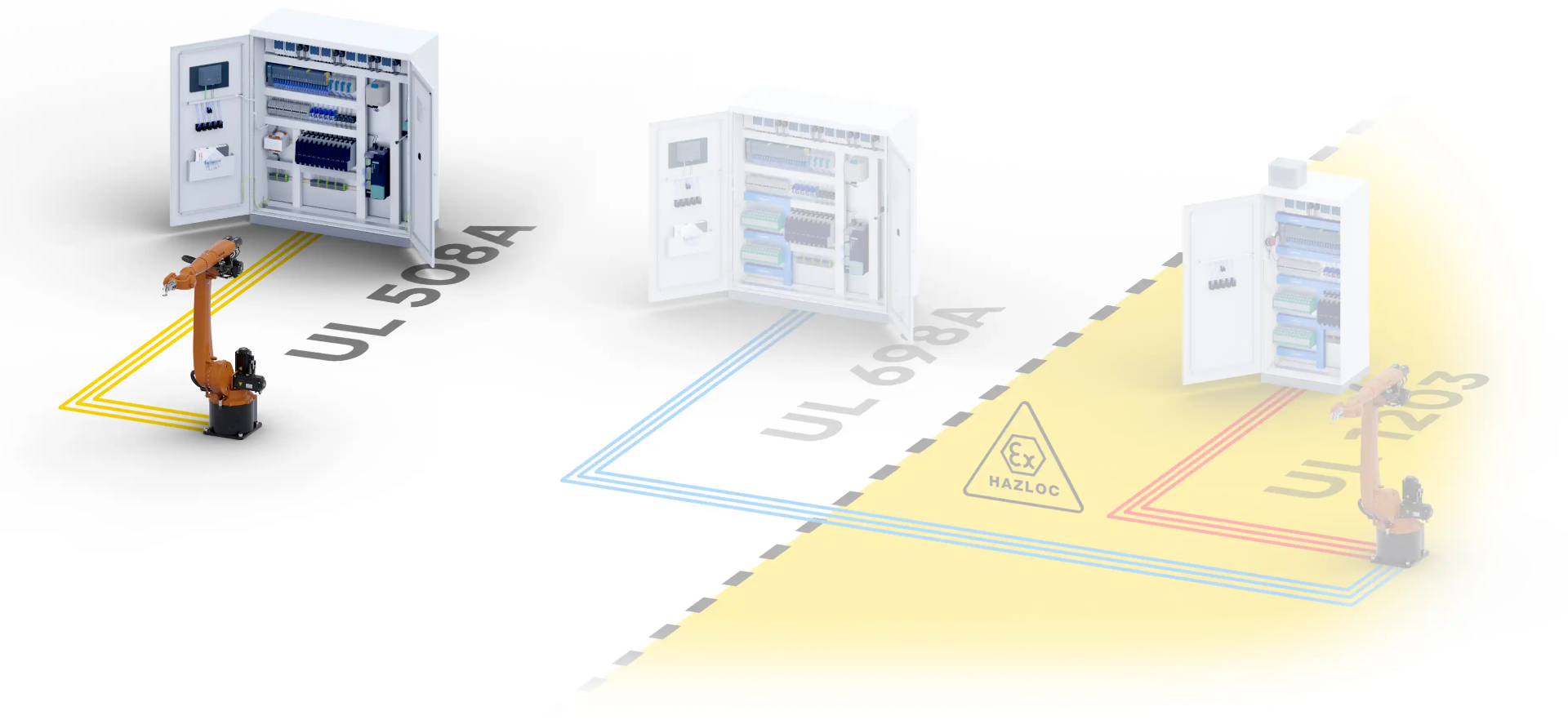
The best-known NRTL in the U.S. is Underwriters Laboratories (UL), which has its own standard for switchgear, UL 508A. Of course, it would be too expensive for a German company manufacturing for the North American market to have every control cabinet tested individually by UL. It is much more efficient to order UL-compliant switchgear from a certified manufacturer.
The switchgear manufacturer can flexibly design and build the cabinet according to the customer’s requirements while complying with UL 508A, and affix a UL label to it while it is still in Germany. After industrial assembly, the local building authority inspector at the site in North America can immediately verify that the electrical switchgear complies with legal requirements. This approach also applies to products or systems manufactured in limited quantities or as one-offs. A Limited Production Certification, which is issued in Germany by a recognized NRTL such as UL, is ideal for this purpose.
UL standards are not laws—and yet they are almost indispensable
In this context, people often refer to “UL approval,” even though this does not constitute an official authorization of a system. From a strictly legal standpoint, a UL label is not required for the commissioning of the switchgear or the (special-purpose) machines it controls. UL is also not the only NRTL that certifies switchgear for the U.S., but it is the oldest and best known. This accounts for UL’s prominent position in the U.S. compared to its competitors.
UL is a familiar name to virtually every AHJ inspector, and many of these inspectors rely on the UL label as a visible sign of certification in their daily work. But it’s not just government officials— insurance companies and wholesalers also place great importance on UL certification. Anyone who forgoes it for a switchgear system is making their path into the U.S. unnecessarily difficult.
Zusammenfassung
Even our brief review has shown that the regulatory approval of equipment and machinery in the U.S. is no simple matter, since not only must national laws be observed—which differ significantly from our European regulations—but local specifics may also come into play. Nevertheless, it is a significant help if the machine’s control panel has UL certification. This can speed up the entire process considerably.


