




Relation to UL
The NFPA is a nonprofit organization active in the fields of fire safety, electrical safety, and building safety. Together with UL, the NFPA forms the basis for technical regulations governing the electrical equipment of machinery in the United States.
What does NFPA stand for?
The National Fire Protection Association (NFPA) is a U.S.-based nonprofit organization dedicated to fire safety (National Fire Code).

NFPA
The National Fire Protection Association (NFPA) was founded in 1896. Its mission is to “help save lives and reduce losses through information, knowledge, and passion.” The organization is headquartered in Quincy, Massachusetts. More than 50,000 people worldwide are members of the NFPA. In addition, there are over 80 member organizations from the United States. It considers itself an authority on fire, electrical, and building safety.
The NFPA has developed over 300 codes and standards to minimize the risk and impact of fires. This body of regulations is primarily applied in the United States and establishes criteria for construction, fabrication, design, service, and installation. There are more than 250 technical committees, consisting of approximately 9,000 volunteers. They review all public comments and vote on revisions through a process approved by the American National Standards Institute (ANSI). The NFPA offers free online access to its codes and standards.
One of the most important standards for control panel construction is the NFPA 70 safety standard. It specifies exactly how electrical installations and their parameters (operating voltages) must be designed, as well as the method of cable routing in the low-voltage range. The low-voltage range refers to electrical fuses, the electrical power supply, and NEMA plugs, which are widely used in North America.
Reference to UL – NFPA 79
This standard specifies the exact modifications required for terminals, wiring, and, for example, labeling. As a result, numerous details must be adjusted so that a machine can be put into operation in North America . This also applies to the installation of the system.
What does NFPA 79 mean?
NFPA 79 is the “ElectricalStandard for Industrial Machinery” and applies to the electrical equipment of machines in the United States. It is the U.S. counterpart to the European standard EN 60204-1.
NFPA 79
The NFPA 79 standard applies to the electrical and electronic equipment, devices, and systems of industrial machines with a rated voltage of 600 volts or less. It is the counterpart to the European standard EN 60204-1 and applies starting at the connection point of the machine’s electrical equipment.
The National Fire Protection Association (NFPA) developed this standard to minimize the potential risk of electric shock and the risk of electrical fire posed by industrial metalworking and woodworking machines, as well as plastic processing machines and mass-produced equipment that cannot be moved by hand.
Scope of Application
NFPA 79 specifies the requirements that an electric machine must meet with regard to:
- Design,
- Wiring,
- Grounding,
- Operation,
- Labeling,
- Documentation and
- Exam
must meet.
The National Electrical Code (NEC) serves as the overarching regulation for electrical installations in the United States. In Article 670, it refers to NFPA 79 (Electrical Standard for Industrial Machinery) for additional requirements regarding industrial machinery. This gives the NFPA 79 standard the force of law. Together with the UL standard UL 508A (Industrial Control Panels), NFPA 79 forms an important basis for compliance with technical regulations governing the electrical equipment of machines in the United States.
Operating Permit
Machinery and equipment used in the United States must be certified and listed. For successful acceptance, the components that make up a machine must be correctly assembled in accordance with the NFPA 79 user standard. The inspection of the machine or equipment assembly is conducted
- by independent, nationally recognized testing laboratories, known as NRTLs (Nationally Recognized Testing Laboratories) for short, or
- by electrical inspectors from the competent authority, known as the AHJ (Authority Having Jurisdiction) for short.
Only if the certified components have been properly installed in accordance with the UL 508A and NFPA 79 standards during the assembly of the machine or system will the AHJ or NRTL grant operational approval. The operator, not the machine manufacturer, is responsible for this.
Adjustments to the details to comply with U.S. regulations
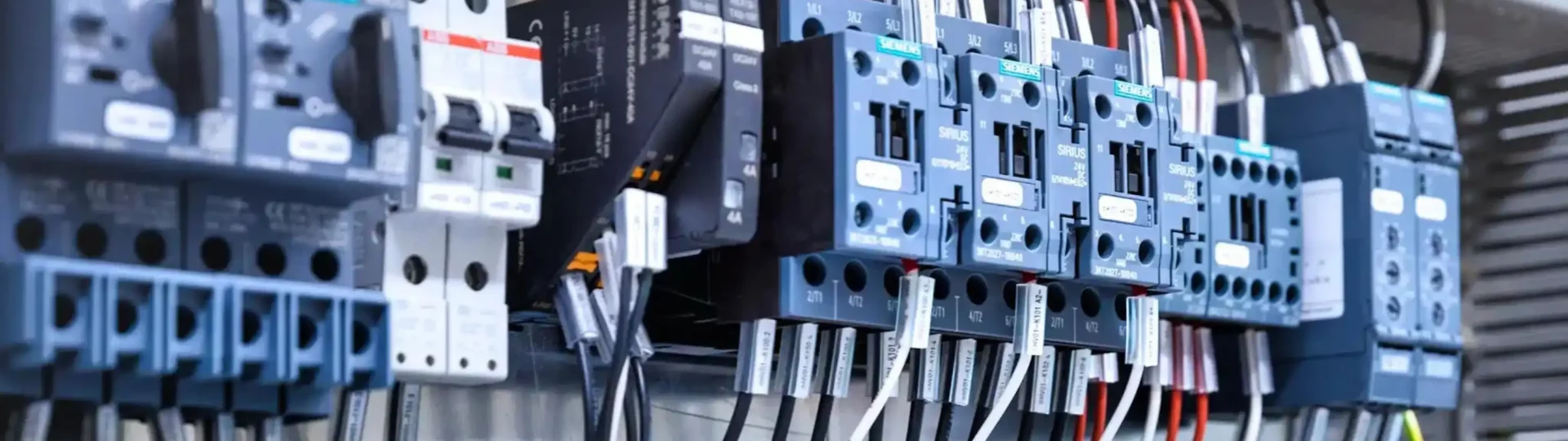
Before a machine or control cabinet can be put into operation in North America, numerous details must be adapted. These include, for example, the cabinet lighting, electrical outlets, and the door locking mechanism. Terminals, wiring, and labeling must also comply with U.S. standards, as must the enclosure—that is, the control cabinet itself. The NFPA 79 standard, for example, specifies that the control voltage must not exceed 120 V.
Zusammenfassung
Founded in 1896, the nonprofit organization NFPA (National Fire Protection Association) is dedicated to fire safety, electrical safety, and building safety. It pursues its mission of “saving lives” by developing more than 300 codes and standards to minimize fire safety risks.
An important standard for mechanical engineers is NFPA 79, the so-called “Electrical Standard for Industrial Machinery.” This standard applies to electrical equipment with a rated voltage of up to 600 volts and specifies requirements for, among other things, the design, wiring, and labeling of the machine. NFPA 79 is the counterpart to the European standard EN 60204-1 and is intended to minimize the potential risk of electric shock and electrical fire.

