




As automation and connectivity increase, so do the security requirements for industrial facilities. Facility security is therefore not only a legal obligation but also a prerequisite for sustainable and future-proof production.
Relation to UL
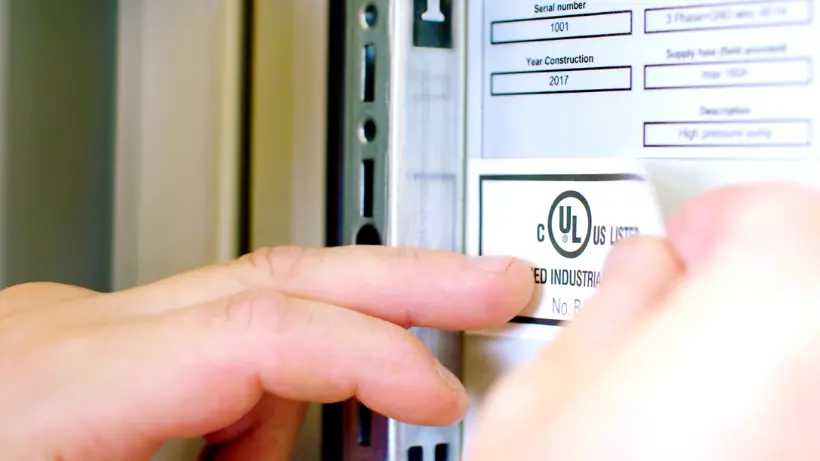
UL standards play a crucial role in ensuring equipment safety in an international context. In control panel manufacturing in particular, UL certifications ensure compliance with the highest safety and quality requirements. They are particularly important for exports to North America, as UL standards are often mandatory there. As such, they play a key role in minimizing risks and ensuring the safe operation of equipment worldwide.
What is meant by “plant safety”?
Plant safety refers to all measures that enable the trouble-free and safe operation of industrial plants. This includes both technical safety devices and organizational processes used to identify, assess, and minimize risks. The goal is to operate facilities reliably and efficiently while ensuring a high level of protection for employees and the environment.


Fundamentals of Plant Safety
Plant safety encompasses a wide range of measures designed to ensure the reliable and safe operation of industrial facilities. It is based on a systematic risk assessment, in which potential risks to people, machinery, and the environment are identified and evaluated.
Technical Safety
Technical safety forms the foundation of plant safety. It encompasses all structural and electrical safety devices, such as control cabinets, emergency stop switches, sensors, and monitoring systems. These measures ensure that systems are shut down or protected in a controlled manner even in the event of malfunctions, thereby preventing damage to components or hazards to personnel.
Organizational Measures
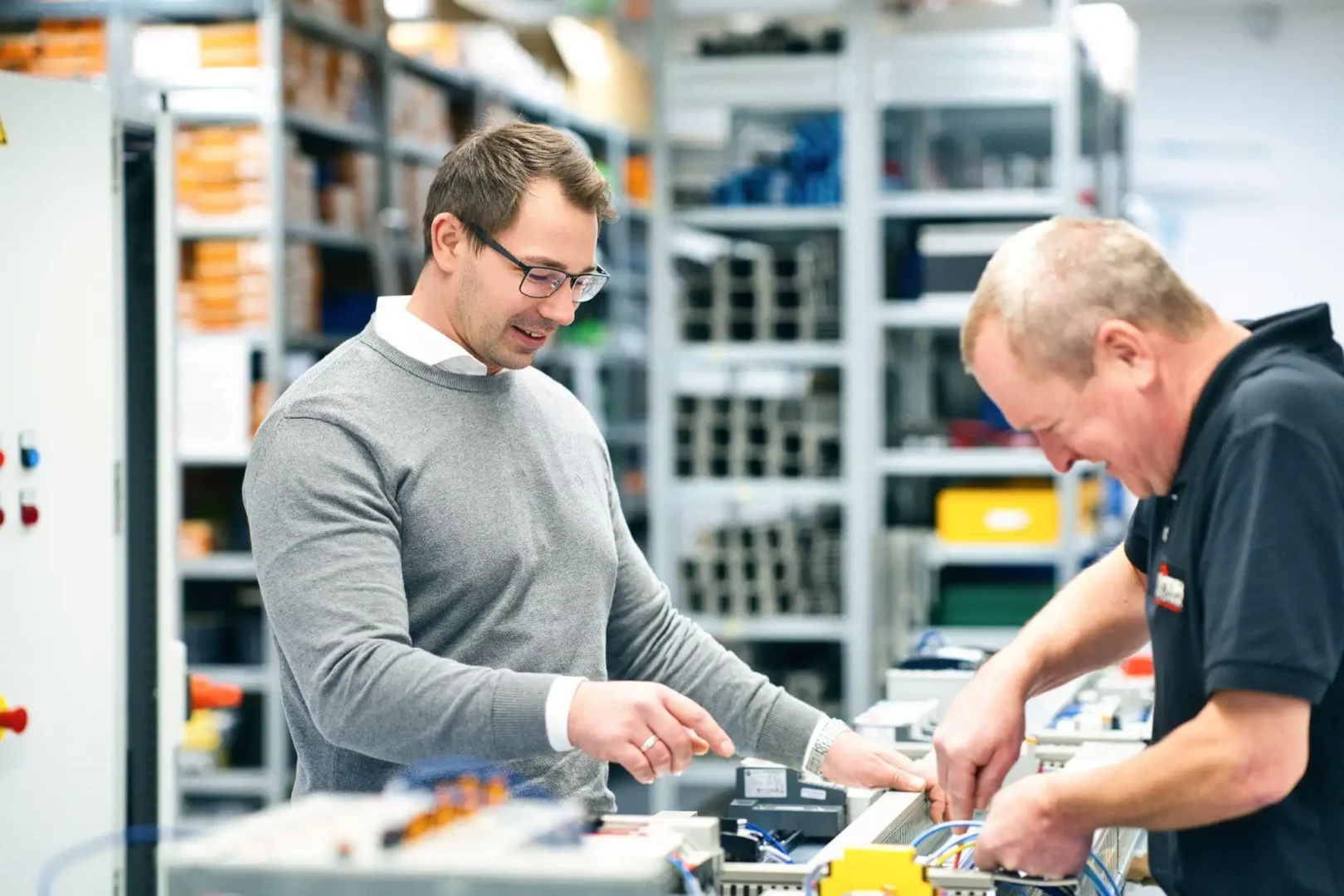
Organizational measures complement the technical safety devices. These include clear operating instructions, structured maintenance and inspection schedules, and regular staff training. They ensure that equipment is operated correctly and that potential risks are identified early on, thereby significantly increasing operational safety.
Norms and Standards
Standards and specifications establish uniform requirements for planning, plant construction, and operation. International standards such as ISO, IEC, and DIN define criteria for safety, quality, and documentation, and facilitate the international comparability of plants. Compliance with these standards forms the basis for a high and transparent level of safety.
EU Directives and IEC: Equipment Safety in Europe
In Europe, EU directives and the standards of the International Electrotechnical Commission (IEC) play a crucial role in ensuring equipment safety. The Low Voltage Directive (2014/35/EU) and the Machinery Directive (2006/42/EC) ensure that equipment is operated in a way that minimizes risks to people, the environment, and operations. Supplementary standards such as EN 60204-1 and ISO 13849 define requirements for electrical equipment and functional safety, enabling hazards to be detected and controlled at an early stage.
UL and CSA: Equipment Safety in North America
In the United States and Canada, the standards set by Underwriters Laboratories (UL) and the Canadian Standards Association (CSA) play a central role in ensuring the safety of electrical systems. UL 508A specifies requirements for control and monitoring systems, while the National Electrical Code (NFPA 70) governs the safe installation of electrical systems. In Canada, CSA C22.2 No. 14 defines comparable requirements.
Occupational Safety and Health and OSHA Oversight
The Occupational Safety and Health Administration (OSHA) also ensures that workplaces, including industrial facilities, comply with legal safety requirements. In terms of facility safety, this means that technical safeguards and organizational measures must be implemented to minimize risks to people, the environment, and operations.
Risk Management and Accident Prevention
A key component of plant safety is risk management, which aims to identify and assess hazards at an early stage and implement appropriate countermeasures. This includes the systematic identification of potential risks to people, the environment, and plant components, as well as the development of strategies to minimize their impact.
Hazard Prevention Strategies
An important aspect is accident prevention, which involves analyzing emergency scenarios and implementing appropriate protective measures. These include, for example, redundant control systems, emergency shutdown functions, and alarm and monitoring systems that ensure safe operation even in the event of unexpected malfunctions. Continuous inspection, maintenance, and adjustment of safety measures ensure that the facilities can be operated reliably and safely over the long term.
Equipment Safety in Control Cabinet Construction
In control cabinet construction, system safety is of particular importance, as control cabinets ensure the functional safety and smooth operation of the entire system. They contain the essential UL-listed components responsible for control and monitoring. A failure of these components can have serious consequences.
Protection Classes and Fire Behavior
Control cabinets must meet high standards for protection classes and fire behavior in order to reliably protect the components they contain and minimize risks to personnel in the event of a fault. Materials and design play a crucial role in preventing the spread of fire and ensuring the system continues to operate even under critical conditions.
Temperature Management
Another key element of safety is temperature management. Efficient ventilation, cooling, or thermal insulation prevent components from overheating, extend their service life, and reduce the risk of failures. Thermal safety is ensured through a well-designed layout of the components and the integration of appropriate systems.
Wiring, Redundancy, and Error Prevention
Flawless wiring, structured cable routing, and the separation of electrical circuits reduce the risk of short circuits and overloads. Redundant systems and monitoring functions ensure that individual functions can continue to operate in the event of partial failures, thereby increasing the safety and reliability of the entire system.
The Control Cabinet as the Control Center of a System
The control cabinet is the central control element of industrial plants and is crucial for safe and efficient operation. It contains all electrical components—such as controllers, relays, protective devices, and control systems—that enable the monitoring and control of the plant. Faulty control cabinets or defective wiring can cause outages or pose safety risks. Therefore, careful planning, professional fabrication, and regular maintenance are essential to ensure operational safety and plant safety.
Zusammenfassung
Plant safety is a key factor in ensuring the trouble-free and safe operation of industrial facilities. By combining technical safety devices, organizational measures, and compliance with national and international standards, risks to people, the environment, and operations can be minimized. The continuous inspection, maintenance, and optimization of facilities—including critical components such as control panels—ensure that production processes can be operated reliably, efficiently, and in a sustainable manner.

