




Technical machinery or equipment poses risks that endanger people, the environment, or property. Functional safety ensures that the risk of a dangerous failure is reduced to an acceptable level and that any malfunctions that do occur do not have serious consequences.
Relation to UL
UL standards, including the specific UL Mark for functional safety, are the basis for the evaluation and certification of the safety of electrical equipment. Compliance with UL standards, as indicated by the UL Mark, confirms that products have passed rigorous safety tests.
What is functional safety?
Functional safety refers to an approach in which targeted measures are taken to ensure that technical systems, machines, or facilities are designed, implemented, and operated in such a way as to minimize the risk of dangerous failures.

Why is functional safety so important?
With the increasing digitization and automation across all areas of life and industry, processes and systems are becoming increasingly complex and interconnected. This leads to improved control capabilities, but also raises new challenges—particularly with regard to security risks—that must be identified and assessed.
Functional safety (also abbreviated as FuSi) is monitored and controlled by specialized electrical, electronic, or programmable electronic components. The goal is to analyze, standardize, and continuously improve the processes of safety-related systems and components throughout their entire lifecycle. This is because failures in functional safety can result in massive liability claims .
It is therefore essential that all safety risks associated with plants and machinery—including hazards resulting from malfunctions in complex systems —be reduced to an acceptable level. To prevent errors and dangerous system failures, there are standards for functional safety as well as an independent assessment of functional safety, known as a Functional Safety Assessment.
Functional Safety for Risk Assessment
Functional safety is a product characteristic and refers to the aspect of overall safety that depends on the correct operation of electrical, electronic, and programmable systems. The goal is to reduce risks arising from malfunctions to an acceptable level. To ensure functional safety, risk and hazard analyses are necessary as early as the design phase to quantitatively assess the extent of potential damage. Among other things, failure rates are determined for this purpose.
Lower probability of random errors occurring
However, these can only refer to random, statistical errors. These are primarily hardware failures—such as physical defects or wear and tear—of electronic components, which are statistically determined with a reproducible probability. This is done by measuring them under expected operating conditions, based on the expected ambient temperature, radiation exposure, and the components’ rated service life. This yields, on the one hand, the probability of a failure occurring and, on the other hand, enables countermeasures to be planned.
Systematic errors: design flaws, specification errors, human error
In addition, however, the components must also be examined for systematic errors. These can be attributed to defects in the design, implementation, or system. However, systematic errors are not quantifiable, which means that failure rates cannot be determined. This is because they can only be traced to causes that become apparent through modifications to the designs, the manufacturing process, or even during operation—such as corrosion and wear.
During the planning phase, typical systematic errors include specification errors or errors in translating a client’s requirements regarding the machine’s performance into the user program for the safety control system. Systematic errors also occur in mechanical components of safety systems, such as the connections between electronic sensors and operating media, as well as in the mechanical components of the actuators. During operation, systematic errors can also be attributed to clogged signal lines, erosion and corrosion, and human error.
Measures for Controlling Functional Safety
Systematic errors in safety functions can have serious consequences, but there are effective methods for minimizing the risk of such errors. A key strategy is the implementation of diverse redundancy. This means that critical functions are performed by multiple, independent systems or components, so that the failure of one element does not lead to the failure of the entire system. Regular maintenance and testing are also essential components for reducing systematic errors.
Functional Safety: From Design to Decommissioning
Considering the entire life cycle of safety circuits is another key aspect of functional safety. Systematic hardware and software errors must be ruled out as much as possible as early as the planning and development phases. The relevant standards also provide guidance on the steps that are critical for ensuring functional safety. These include risk analyses, the specification of safety requirements, the validation of safety functions, regular functional tests, and, finally, the decommissioning of systems. These measures enable potential problems to be identified and resolved early on, before they lead to serious failures .
This holistic approach ensures that all aspects of safety are taken into account—from the initial design, through industrial assembly and operation, to the final decommissioning of a system. This also includes the installation of disconnect switches that interrupt the power supply. This is because errors can occur during all these phases, and ideally, these errors should not lead to dangerous situations such as electric shock, fire, or explosions. In addition, replacing equipment in a timely manner once it reaches the end of its service life is important to ensure the reliability and safety of the systems.
Functional safety alone is not enough
However, it is important to understand that functional safety covers specific areas and does not overlap with other important safety aspects such as electrical safety, fire safety, or radiation protection. These areas require their own specific safety measures and standards.
Case Study: Functional Safety in Control Cabinet Construction
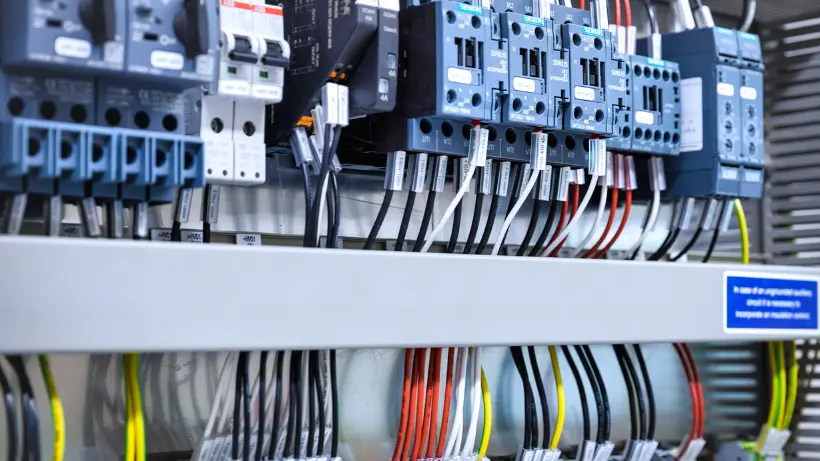
Control cabinets, which are the core components of control and automation technology in many facilities, contain essential electrical components such as control devices, relays, switches, and protective devices. These components must function reliably and safely to ensure the overall integrity of the system.
Depending on the installation site and environmental conditions, the specific requirements for the control cabinet may vary—for example, in terms of climatic conditions, available space for ventilation systems, and dust management. A thorough risk assessment during the design phase is therefore essential to meet the varying safety and performance requirements. Typical risk factors that must be avoided include electrical overload, the risk of short circuits, and cooling system malfunctions.
The risk assessment involves identifying such risks, evaluating their potential impacts and probabilities, and developing countermeasures. If the safety functions do not meet the required performance level, adjustments or enhancements to the control cabinet are essential. These could include, for example, the selection of specific components, the design of redundant circuits, or the implementation of advanced monitoring systems. This not only minimizes risks but also saves time and money.
How can functional safety be demonstrated?
Demonstrating the functional safety of products, (special-purpose) machines, and systems is a multi-layered process that is closely linked to internationally recognized standards and certifications. Standards such as those from CSA (Canadian Standards Association) and UL (Underwriters Laboratories) play a central role in this process. These standards define specific requirements and test procedures to ensure that the relevant devices and systems meet the highest safety standards.
The UL Mark for Functional Safety
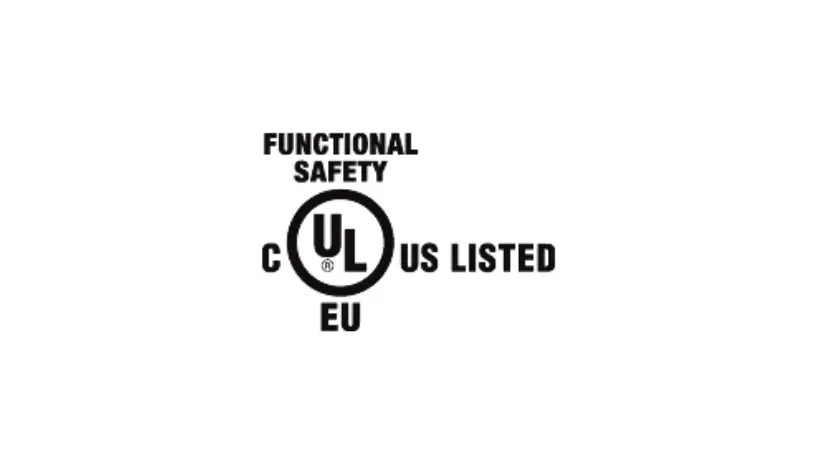
The UL Mark for Functional Safety is a globally recognized symbol of safety and quality. Products bearing this mark have passed rigorous testing that confirms their compliance with the relevant safety standards. This mark not only indicates compliance with UL standards—since a product must meet the requirements of the UL Listed mark to earn it—but also ensures that the products or systems are subject to ongoing reviews and updates to keep pace with the latest safety requirements. Demonstrating functional safety through CSA and UL standards, combined with the UL Mark, thus provides manufacturers and users with a reliable basis for ensuring and confirming the highest safety standards.

