



Relation to UL
For a UL-compliant control cabinet, the installation area is of great importance. HazLoc is the abbreviation for Hazardous Locations, meaning “hazardous locations” as the site of use. In HazLocs, there is a risk of fire or explosion. Accordingly, when certifying a control panel for this environment, additional standards and regulations must be followed, including the provisions of NEC 500, which define the classification of hazardous locations and the requirements for electrical equipment in such areas.
What does HazLoc mean?
HazLoc is short for ” Hazardous Locations.” In control engineering, locations where there is a risk of fire or explosion are referred to as HazLocs.

Hazardous Locations (HazLoc)
To protect workers in the workplace from potential explosions and fires caused by equipment, there are different classification systems in Europe and North America. In addition, there are a multitude of standards that must be strictly adhered to. And it is precisely these differences that pose major challenges for designers and manufacturers of machines, devices, and systems who wish to export their products from Europe to North America.
This is because explosion protection in North America—known as “HazLoc certification”—differs significantly from ATEX and IECEx, the standards used in Europe and many other countries.
Classification for HazLoc
In North America, OSHA, the U.S. Occupational Safety and Health Administration, establishes workplace requirements based on safety standards developed by organizations such as the NFPA, the National Fire Protection Association. A very important standard in this context is NFPA 70, the National Electrical Code (NEC). It defines hazardous locations as areas where fire or explosion hazards may arise from flammable gases or vapors, flammable liquids, combustible dusts, or flammable fibers or airborne particles. This definition forms the basis for the classification of hazardous locations in North America.
Specifically, potentially explosive areas are classified according to the type of hazardous area, the condition, and the nature of the hazardous materials. Depending on the hazard situation, a distinction is made between different Ex zones.
CCNs are also important for inspectors, as they help them verify that a component is being used properly.
Type of Hazard Zone
- Class I covers areas where flammable gases or vapors may be present in the atmosphere in sufficient quantities to be explosive or flammable.
- Class II refers to areas that are at risk due to the presence of combustible dust suspended in the air.
- Class III covers areas where fibers and airborne particles accumulate near machinery or on lighting fixtures and can be ignited by sparks, heat, or hot metal.
Operating Conditions – Condition
- Division 1 (Normal Conditions) – The hazard is present during normal production operations as well as during frequent repair and maintenance work.
- Division 2 (Abnormal Conditions) – The hazard arises only in the event of accidental breakage, bursting, or improper operation.
Type of Hazardous Substances
- In Class I, hazardous substances are grouped according to their ignition temperature, explosion pressure, and other flammable properties. Groups: A (acetylene), B (hydrogen), C (ethylene), and D (propane).
- In Class II, classification is based on the ignition temperature and conductivity of the hazardous substance
Groups: E (metal dusts), F (coal dusts), and G (grain dusts). - Class III includes materials used in wood and textile processing that are highly flammable but not explosive.
Groups: Fibers and airborne particles in wood and textile processing
The first edition of the Canadian Electrical Code was published as early as 1927. To this day, this CE Code remains a vital component of Canada’s electrical safety system, protecting both installers and consumers. It is updated every three years to reflect the latest technological advances and other important developments. In this way, it aims to help maintain and improve safety despite ongoing technological advancements.
Another important step took place in 1940: CESA began testing and certifying electrical products intended for sale and installation in Canada. Shortly thereafter, in 1944, the Canadian Engineering Standards Association (CESA) was renamed the Canadian Standards Association (CSA) to reflect its expanding scope of activities.
In the years that followed, the organization grew and expanded into other countries. In 2012, all business units were consolidated under the name CSA Group. Today, CSA Group is a global organization that leads the way in Canada in research, development, and education regarding standards, thereby improving safety, health, and the environment in Canada.

How is a control system certified for HazLoc?
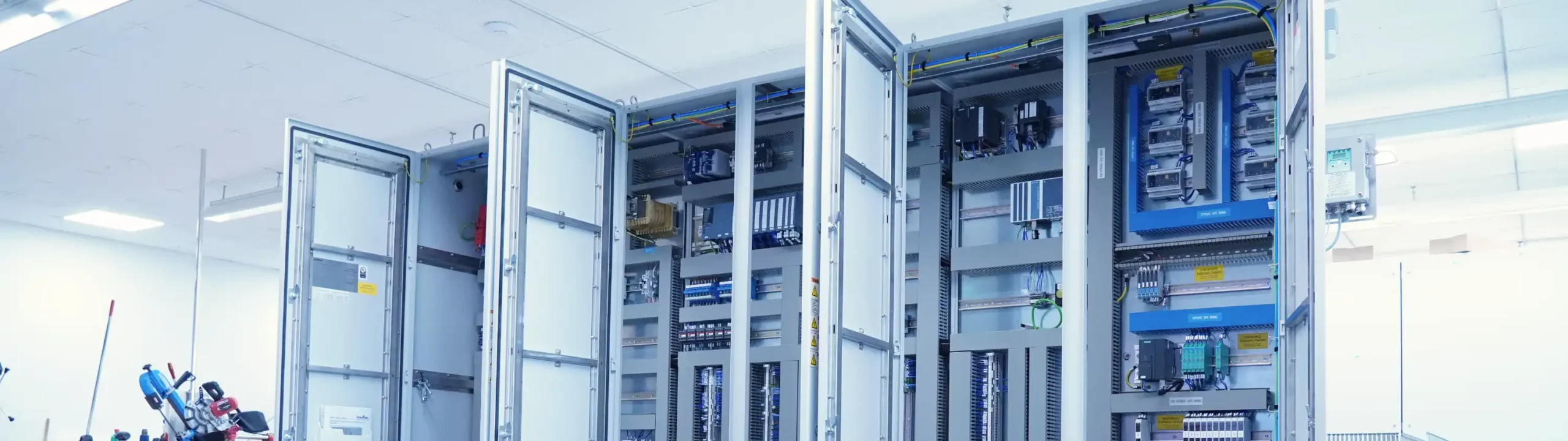
Electrical components are a potential ignition source and must therefore comply with additional standards and regulations for certification in HazLoc areas. For example, control cabinets located in hazardous locations must comply with the UL 1203 standard, which was developed by UL (Underwriters Laboratories Inc.), the leading North American testing laboratory and NRTL. It is the standard for explosion- and dust-explosion-protected electrical equipment intended for use in precisely classified hazardous locations.
Visit the website for UL 1203 explosion-proof control cabinets
The UL 698A standard applies to control cabinets that are not used directly in potentially explosive atmospheres but are directly connected to them. This area is also referred to as an Ex-i area.
Visit the website for UL 698A Ex-i control cabinets
The UL standards UL 1203 and UL 698A apply to all control systems in hazardous locations (HazLoc) that are exported to the United States. They help ensure that UL can largely eliminate the risk of explosions in U.S. workplaces.
Zusammenfassung
The abbreviation HazLoc stands for Hazardous Locations. In control engineering, this term refers to locations where there is a risk of fire or explosion. Therefore, special standards and requirements apply to these areas, which were developed by the NFPA, among others, and established by OSHA. An important standard for HazLocs is the National Electrical Code (NEC), which defines what constitutes a hazardous location and classifies them according to the type of hazardous area, conditions, and nature of the hazardous materials. Control cabinets located in HazLocs must comply with the UL 1203 standard. In Ex-i areas—that is, areas directly connected to HazLocs—the UL 698A standard applies.

