




In industrial environments where flammable gases, vapors, or dusts are present, even a small spark can have devastating consequences. Explosion protection encompasses all measures and technologies designed to prevent explosions or minimize their effects.
What exactly is explosion protection?
Explosion protection is a term that may sound technical and cumbersome at first glance, but at its core, it describes something truly essential: the protection of human life, facilities, and our environment. Anywhere where flammable gases, vapors, or dusts are present, a hazardous explosive atmosphere can form under certain conditions. And this is exactly where explosion protection comes into play.

More Than Just a Regulation: Explosion Protection as Part of Corporate Culture
Explosion protection encompasses all measures that either prevent an explosion from occurring in the first place or, in the event of an emergency, limit its effects as much as possible. For many companies, explosion protection is not an afterthought but an integral part of their daily operations. This is especially true in industries where safety is the top priority.
How does an explosion occur?
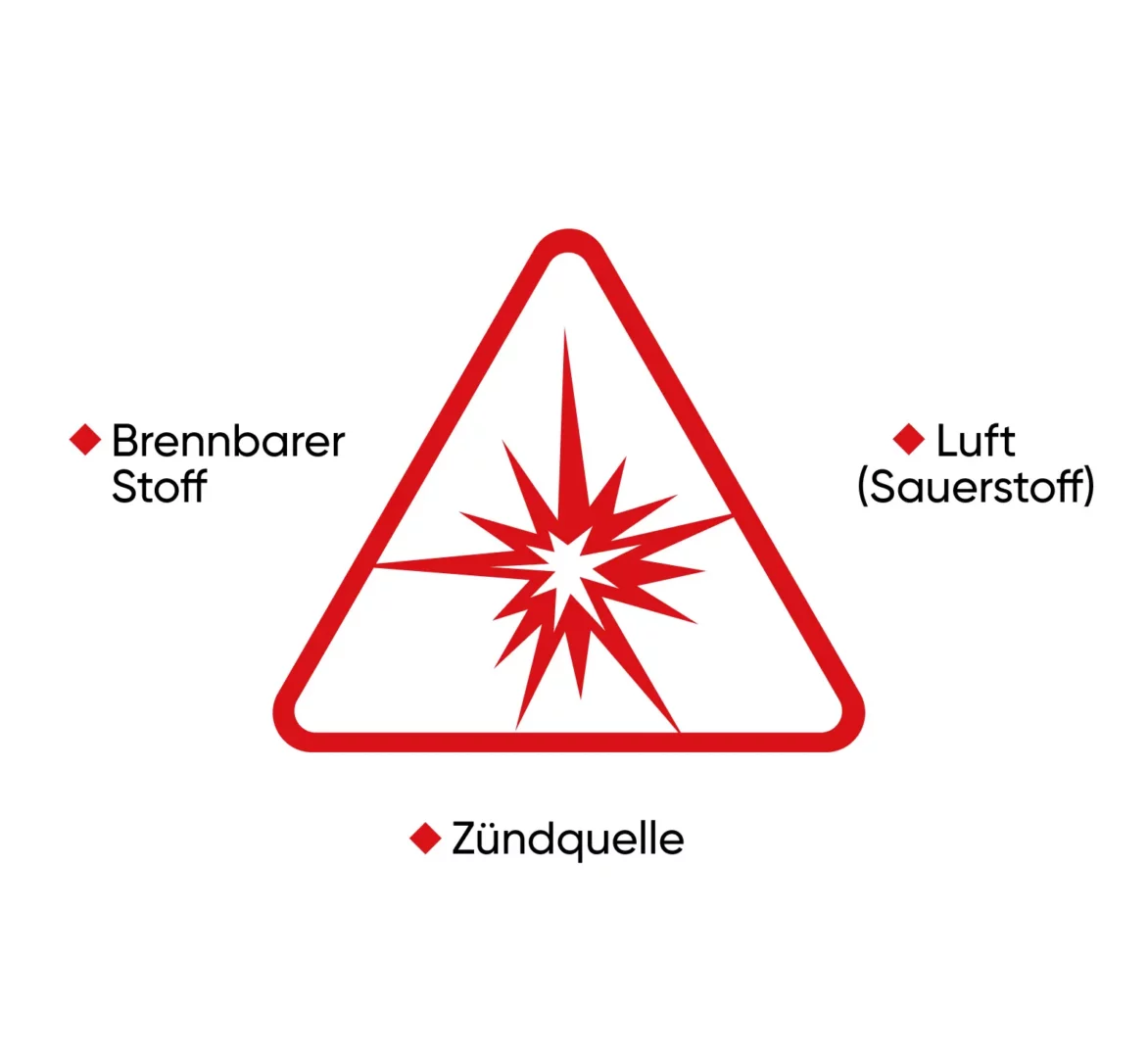
For an explosion to occur at all, three things must be present simultaneously: a combustible substance, oxygen, and an ignition source. This is known as the “explosion triangle.” If any one of these three factors is missing, the situation remains safe and an explosion cannot occur. This is precisely where safety measures come into play, as they aim to eliminate at least one of these elements.
Effectively Managing Explosion Risks
As simple as the principle may sound, putting it into practice is complex. This is because flammable substances—such as solvents, dust particles, or gas mixtures—cannot be completely eliminated from many production processes. Therefore, smart technical solutions are needed to mitigate the risks.
Three Levels of Protection: A Holistic Approach to Explosion Protection
Explosion protection is divided into three key areas, each of which takes a different approach to minimizing risks and ensuring a safe working environment:
The primary goal of explosion protection is to prevent the formation of an explosive atmosphere in the first place. This can be achieved through closed systems, proper ventilation, or specialized extraction techniques.
Secondary explosion protection comes into play when explosive atmospheres cannot be avoided. It focuses on eliminating potential ignition sources, such as through temperature-monitored components or spark-free electrical components.
If, despite all precautions, an incident were to occur, the tertiary explosion protection system would be activated. The goal here is to minimize the impact as much as possible, for example through pressure relief, protective enclosures, or special containment systems.

Hazardous Areas: Where Exactly Does the Danger Lurk?
Not every facility poses the same level of danger, which is why they are classified into so-called zones to help assess the risk. This zoning system indicates how frequently and for how long an explosive atmosphere may occur in a specific area.
For gases, a distinction is made between Zone 0 (permanent explosive atmosphere), Zone 1 (occasional explosive atmosphere), and Zone 2 (rare explosive atmosphere). For dusts, the zones are designated Zone 20, 21, and 22, respectively. This classification is essential because different requirements apply to the equipment and protective systems used, depending on the zone.

Regulations and Standards: An Overview of ATEX and IECEx
To ensure that explosion protection is not left to chance, there are clear sets of regulations, such as the ATEXDirective in Europe and the IECEx system at the international level.
The ATEX Directive (2014/34/EU) specifies the requirements that equipment and protective systems must meet when used in potentially explosive atmospheres. It applies to the entire European Economic Area.
The IECEx system, in turn, enables uniform certification worldwide and is particularly important for companies that also use their products outside of Europe, such as in the U.S. or Asia. Both sets of regulations build trust and ensure that explosion-protected equipment truly delivers what it promises.
Explosion Protection Rules in Practice
Explosion protection is implemented in accordance with technical standards and legal regulations. In Germany, these include, among others, TRGS 720 through 722, which specify risk assessments and protective measures, as well as the Industrial Safety Regulation (BetrSichV), which sets requirements for the safe operation of facilities. Another key set of standards is the EN 60079 series, which contains detailed requirements for the design, testing, and installation of explosion-protected electrical equipment. These standards provide manufacturers and operators with clear guidelines for effectively implementing explosion protection in practice, such as during the planning and installation of electrical switchgear.
Explosion Protection for Control Cabinets
Explosion protection plays a crucial role, particularly in electrical systems such as control cabinets. In potentially explosive atmospheres, conventional control cabinets can quickly become a source of ignition—for example, due to hot surfaces, arcing, or inadequate sealing. For this reason, control cabinets intended for use in hazardous areas must be specially certified, as specified by the National Electrical Code (NEC). This includes, among other things, pressure-resistant enclosures, overpressure systems, complete sealing against the ingress of gases or dust, and the limitation of surface temperatures. International certifications, such as those according to UL 698A or UL 1203, are also relevant when the control cabinets are used outside of Europe.
Zusammenfassung
Explosion protection is much more than just a technical regulation: it is an expression of responsibility toward people, the environment, and infrastructure. Only through careful planning, implementation in accordance with standards, and regular inspections can explosion-related accidents be effectively prevented. Electrical systems, particularly control cabinets, play a central role in this regard. By partnering with specialized providers who incorporate explosion protection from the very beginning, you lay the foundation for smooth and safe operations, both domestically and internationally.

